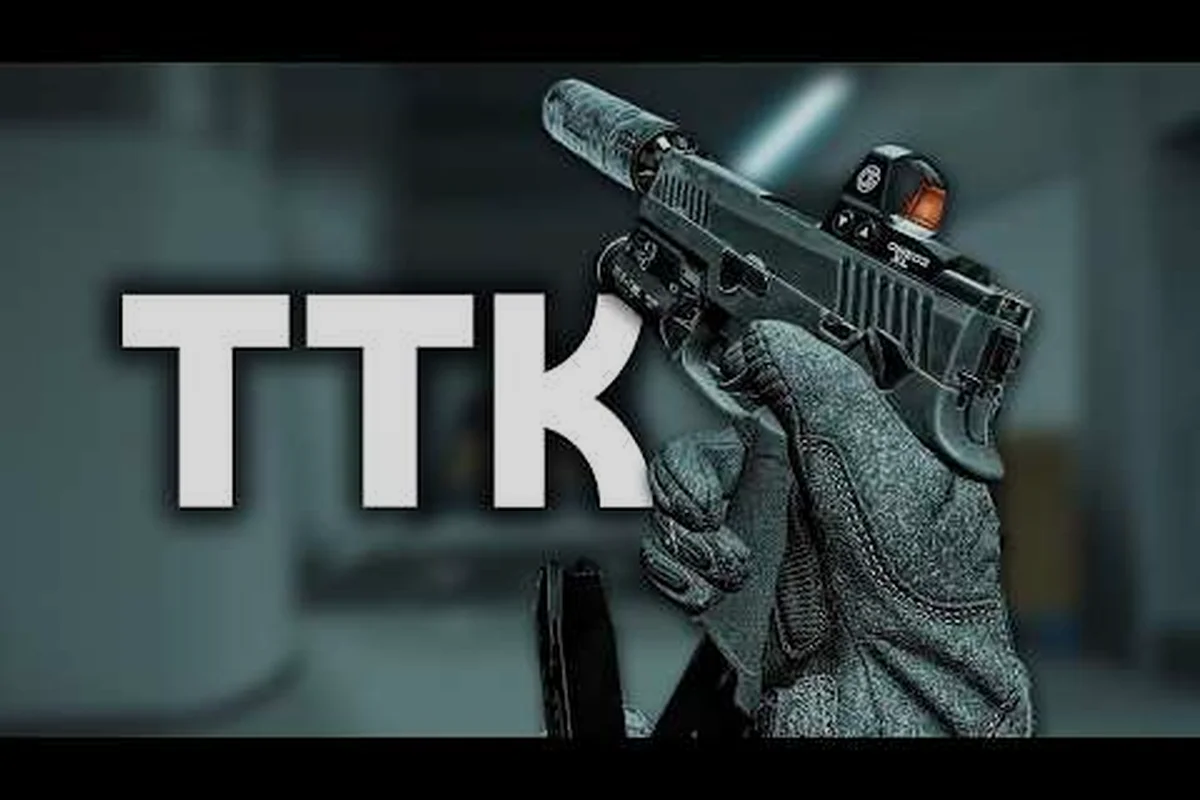
Picking the right gun in TTK Testing is only half the battle. The real edge comes from how you build a class — which platform you choose, which optic you mount, and how you tune the recoil and handling so the weapon matches your personal engagement range. This TTK Testing best loadout guide walks through the current meta class setup, breaks down the attachment slots that actually matter, and shows you how to use the in-game loadout builder to assemble a gun setup that wins more firefights on the V0.05 build. K Testing best loadout guide walks through the current meta class setup, breaks down the attachment slots that actually matter, and shows you how to use the in-game loadout builder to assemble a gun setup that wins more firefights on the V0.05 build, while a side-by-side comparison in our Ttk Testing Best Balance Loadout guide shows how the highest-damage tuning shifts those attachment priorities when raw time-to-kill matters more than sustained accuracy.
Why the TTK Testing Best Loadout Matters Right Now
The game is built around realistic time-to-kill values, which means a half-second advantage in your draw-to-fire chain often decides who drops first. Because the TTK curve is steep — most rifles and SMGs land in the 3-to-5-shot kill window — the attachments you pick, the sidearm you carry, and even the optic height all feed into that small window. A loadout that looks great on paper can still feel sluggish if the barrel, muzzle, and stock choices fight each other, while a carefully tuned gun setup can shave a full 50 ms off your average kill time without changing your aim.
The V0.05 patch also reshuffled the V0.05 meta loadout expectations. Weapon balance passes, the addition of new muzzle options, and changes to how recoil resets between shots have pushed the community toward a smaller pool of "meta" platforms. According to community data shared in the official TTK Testing DevForum thread, the developers are still actively tuning damage and handling, so a class setup that felt perfect in V0.04 may need a small rework now. That is exactly why a stable, repeatable builder workflow beats chasing every hot new attachment.
A well-built TTK Testing class setup also makes the rest of your game easier. When your primary handles smoothly at the ranges you actually fight at, you spend less time fighting the gun and more time reading sightlines, holding angles, and rotating with your squad. The whole system compounds: better gun setup leads to better positioning, which leads to fewer bad engagements, which leads to a higher win rate without ever feeling like you are "tryharding."
| Meta Factor | Why It Matters for Your Loadout |
|---|---|
| Realistic TTK curve | Every 50 ms of handling matters in 3-5 shot kill windows |
| V0.05 balance changes | Old favorites may have shifted; meta is smaller and sharper |
| Attachment interactions | Barrel + muzzle + stock can conflict; builder helps you compare |
| Engagement range variance | One loadout rarely covers CQB and long angles cleanly |
Core Weapon Platforms in the Current Meta
Before you start dropping attachments into the builder, you need a platform that fits the V0.05 TTK Testing meta loadout conversation. The current weapon pool covers pistols, SMGs, carbines, battle rifles, DMRs, and sniper platforms, each with its own role. The V0.05-era arsenal showcases walkthroughs confirm the existence of RX-18, MX-23, and AR-15 / M4-style rifles as the workhorse platforms, and these are the guns you will see most often in competitive lobbies. A solid class setup almost always starts with one of these three.
Rifles like the AR-15 / M4-style platform dominate the mid-range meta because their damage profile, recoil pattern, and fire rate are tuned for the 25–75 meter engagements that show up most in Ground War and Quick Play. Carbines lean faster and lighter, which makes them excellent for CQB and flanking routes where you need to swing corners quickly. Battle rifles occupy a hybrid niche, rewarding patient trigger discipline with one-tap potential at mid range, but they suffer if you spam the trigger. DMRs and sniper platforms round out the long-angle meta, and the right TTK Testing gun setup for open maps almost always pairs a DMR with a fast CQB secondary.
Here is how the main platforms stack up against each other in the V0.05 meta:
| Platform | Best Engagement Range | Strength | Weakness | Role in Loadout |
|---|---|---|---|---|
| AR-15 / M4-style | 25–75 m | Balanced recoil and TTK | Loses to DMRs past 100 m | Primary for most lobbies |
| Carbine (MX-23) | 0–40 m | Fast handling, low weight | Lower per-shot damage | CQB primary or flex |
| Battle Rifle | 30–90 m | High per-shot damage | Slow follow-up shots | Anchored-angle primary |
| DMR | 60–150 m | Long-angle dueling | Crippled in close quarters | Designated marksman pick |
| SMG | 0–25 m | Fastest TTK up close | Falls off past 30 m | Secondary or flank build |
| Shotgun | 0–15 m | One-shot potential | Useless past 20 m | Indoor hold specialist |
| Sidearm pistol | All ranges (backup) | Always available | Limited mag, slow reload | Insurance secondary |
For most players building a TTK Testing best class, the cleanest starting point is the AR-15 / M4-style platform with a pistol sidearm. That combination covers the majority of fight types you will run into, and the attachment pool for these rifles is the deepest in the game. If you prefer a more aggressive playstyle, swap the rifle for an SMG primary and carry a battle rifle as your long-angle option; the meta supports both directions as long as the attachments reinforce the role.
The TTK Testing Loadout Builder, Slot by Slot
The in-game loadout builder is your best friend, but only if you understand what each slot actually does. Most players treat the builder like a checklist and grab whatever attachment has the highest "damage" number, which usually produces a gun that looks good on paper but fights you in practice. A real TTK Testing loadout builder workflow reads the gun first, decides which weakness you want to fix, and only then opens the builder to apply a targeted change.
Optic and Sight Choices
The optic slot is more about personal preference and playstyle than raw stats, but it still matters. The official TTK Testing Roblox game page recommends Transparent Optics in Settings to simulate a both-eyes-open view, which gives you better peripheral awareness through your sight picture. Red dots and holographic sights are excellent for CQB because they let you stay target-focused, while higher-magnification optics unlock longer angles for DMR and battle rifle builds. Choosing the wrong optic for your engagement range is one of the fastest ways to ruin an otherwise solid TTK Testing gun setup.
Muzzle, Barrel, and Recoil Tuning
The muzzle and barrel slots directly shape your recoil and damage profile. Compensator-style muzzles flatten vertical recoil at the cost of a small handling penalty, which is great for full-auto spraying at mid range. Suppressor-style muzzles hide your muzzle flash and dampen sound, but they often lengthen the barrel and slow your ADS time. A heavier barrel can extend your effective damage range, but it also shifts the gun toward longer engagements — pair it with a stock that helps you control the added weight, or your TTK Testing class setup will feel clunky.
Stock, Grip, and Handling
The stock and grip slots are where you decide how the gun "feels" in your hands. A lightweight stock speeds up ADS and movement while walking, which is the right call for aggressive CQB builds. A heavier stock tames recoil and stabilizes the gun for longer bursts, which is what you want on a mid-range rifle or battle rifle. Many players building a TTK Testing best loadout underestimate just how much a single grip change can clean up a chaotic recoil pattern.
Magazine and Ammunition
Magazine and ammunition choices are situational but powerful. Extended mags give you more rounds before reload, which matters in objective modes where chain kills are common, but they also add weight that can slow your ADS. AP or hollow-point style ammo types shift the damage profile and can push your TTK down by a shot at certain ranges. The right answer depends on whether you prioritize uptime or peak damage, and the loadout builder is the fastest way to test both options side by side.
| Attachment Slot | Aggressive CQB Build | Mid-Range Meta Build | Long-Angle Anchor Build |
|---|---|---|---|
| Optic | Red dot / holo | Red dot or 1-2x | 3-4x or higher |
| Muzzle | Compensator | Compensator or flash hider | Muzzle brake / suppressor |
| Barrel | Short / lightweight | Standard | Heavy / extended |
| Stock | Lightweight stock | Standard stock | Heavy stock |
| Grip | Quick-handling grip | Recoil-control grip | Stability grip |
| Magazine | Standard mag | Extended mag | Extended mag |
| Ammunition | Standard | AP or hollow-point | Match-grade |
The point of this table is not to declare one column "correct." It is to show how the same builder workflow produces three distinct class setups, each tuned to a different engagement range. If you copy a streamer loadout without thinking about which range you actually fight at, you will end up with a mismatched build. Spend a few minutes in the builder testing each column on your favorite platform, and you will feel the difference immediately.
TTK Testing Class Setup Templates You Can Copy
Sometimes the fastest way to learn is to start from a known-good template and tweak from there. The following three class setups cover most of the playstyles you will run into, and each one has a clear role inside a squad. They are not "the only" meta answers, but they map closely to what experienced players are running in V0.05 lobbies, and they give you a clean baseline to start your own experiments in the TTK Testing loadout builder.
The "Anchor" class setup is built for players who like to hold a sightline and punish anyone who walks into their crosshairs. It pairs an AR-15 / M4-style platform with a heavier stock, a compensator muzzle, a recoil-control grip, and a 3-4x optic. The gun handles smoothly, lands consistent hits, and is built to win mid-range duels. Carry a pistol as your sidearm so you are not helpless if someone rushes your angle.
The "Flanker" class setup is the opposite philosophy. It uses a fast-handling carbine or SMG with a lightweight stock, a red dot optic, a quick-handling grip, and a short barrel. The goal is to close distance, take the fight into CQB, and use your movement advantage to win before the enemy can settle their aim. Pair it with a battle rifle as a secondary if you expect to push into mid-range territory, or stick with a pistol if you plan to stay mobile.
The "Flex" class setup sits between the two. It uses a standard rifle platform with a balanced stock, a red dot or low-magnification optic, an extended mag, and a recoil-control grip. This is the safest TTK Testing best class choice for solo queue players because it adapts to most engagement ranges without forcing you into a single playstyle. If you are not sure where to start, build this one first and tune from there.
| Template | Primary Platform | Optic | Playstyle | Best Map Type |
|---|---|---|---|---|
| Anchor | AR-15 / M4-style | 3-4x | Hold angles, win duels | Open, long-sightline maps |
| Flanker | Carbine / SMG | Red dot | Close distance, win CQB | Tight, indoor maps |
| Flex | Standard rifle | Red dot / 1-2x | Adapt to engagement | Mixed / mid-size maps |
| DMR Specialist | DMR | 4-6x | Long-angle dueling | Open ground war maps |
| Shotgun Holder | Pump / auto shotgun | Red dot | Hold doorways and chokes | Indoor, close-quarters |
Tuning Your Loadout With Real Match Data
A loadout only matters if it works in your hands, in the maps you actually play, and against the players you face most often. The community has shared a lot of practical advice on how to test and refine a TTK Testing gun setup, and the V0.05 patch gives you the perfect excuse to re-evaluate your current build. Treat the builder as a sandbox, not a final answer, and use the following loop every time you consider changing a slot.
-
Pick a single attachment slot to change and lock the rest of the build.
-
Drop into a free-for-all or bot match and fire 50–100 rounds at a target at your most common engagement range.
-
Note the recoil pattern, the time to land a kill, and how the gun feels on the second and third burst.
-
Swap to a competing attachment in the same slot, repeat the test, and compare.
-
Keep the change only if your kill time drops, your grouping tightens, or your comfort level visibly improves.
This loop sounds slow, but it usually takes less than 20 minutes per slot, and it is the only way to know if a "meta" attachment actually fits your sensitivity and playstyle. Community testing on the V0.05 patch shows that small changes — a different grip here, a slightly heavier stock there — can shift a class from feeling "almost right" to feeling locked in, and that small shift is often the difference between winning and losing a duel you should have taken.
If you want a quick checklist before you commit a build to a real match, run through this list:
-
Primary handles smoothly at your most common engagement range.
-
Optic is clean and does not block your peripheral vision.
-
Stock and grip choices match your movement style (aggressive vs. anchored).
-
Sidearm is a reliable backup, not a random unlock you never tested.
-
Magazine size fits the mode you are queuing for (objective modes favor extended mags).
-
Ammunition choice supports your engagement range (match-grade for long angles, AP for mid, standard for CQB).
For players who want to see the meta in motion, the all-weapons showcase by Fire Mountain walks through the current arsenal and gives you a visual reference for how each platform feels before you commit. Pairing that video with a few builder sessions will get your TTK Testing class setup locked in much faster than blindly copying a single screenshot.
Frequently Asked Questions
What is the single best weapon platform in TTK Testing right now?
The AR-15 / M4-style platform is the most versatile pick in the V0.05 meta because its recoil, TTK, and attachment pool all line up with the 25–75 meter range where most fights happen. It is the safest anchor for a first TTK Testing best loadout, even if a carbine or battle rifle may edge it out in pure CQB or long-angle duels.
Should I use the loadout builder or copy a streamer setup?
Use the builder as your source of truth. Streamer setups are a great starting point because they show you which attachments are being paired together, but they are tuned for that player's sensitivity, mouse, and playstyle. A 20-minute builder session testing each slot at your most common engagement range will always produce a better personal TTK Testing gun setup than a blind copy.
How often should I rework my class setup after a patch?
Re-evaluate after every major balance patch and any time a weapon feels off in your hands. A quick builder pass on the slots you rely on most — optic, muzzle, grip — is enough after small patches, while a full rework makes sense when damage values or recoil curves shift significantly. According to community testing, the V0.05 patch only required a small grip change for most players, but the developers continue to tune handling in newer builds, so stay flexible.
Do I need a sidearm, and which one should I carry?
Yes, always carry a sidearm. A reliable pistol covers you during reloads, lets you finish a wounded enemy who slipped behind cover, and gives you a fast-response weapon if your primary runs dry in a CQB fight. Pick a pistol that handles well at close range and practice the reload timing so you can swap back to your primary without losing tempo.
Can one loadout work for every game mode?
It can, but it usually means compromising. Objective modes favor extended mags and reliable mid-range primaries, while free-for-all lobbies reward faster handling and a CQB-leaning gun setup. Building two saved presets — one for objective modes, one for free-for-all — takes only a few minutes in the TTK Testing loadout builder and gives you a noticeably better experience in each mode.