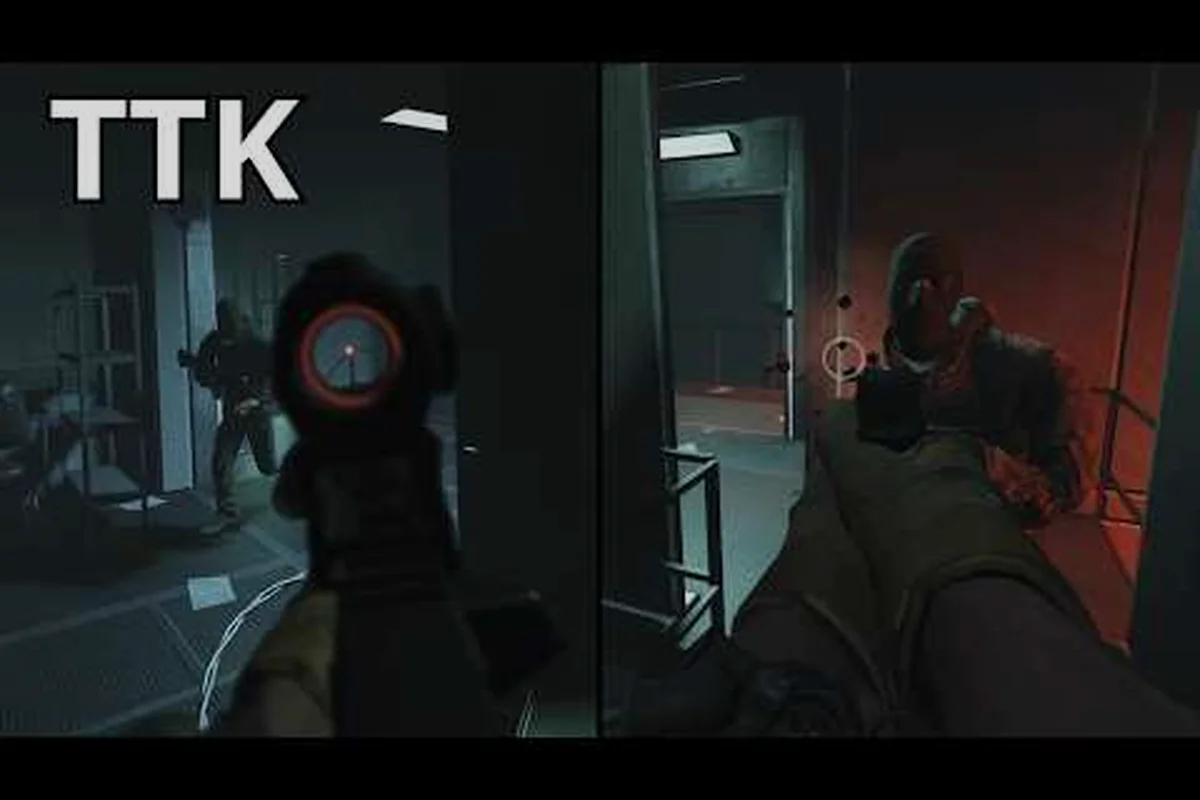
TTK Testing is an early-access tactical FPS on Roblox by Sable Digital, and this walkthrough breaks down exactly what you get inside the current V0.09 build: every playable map in rotation, every core gameplay mode, the realistic time-to-kill tuning that defines the gunplay, and the co-op basics that frame the entire 2026 roadmap. Because the title literally stands for time-to-kill testing, every system is built around how fast weapons drop targets, which means mastering positioning, lean mechanics, and Helmet Cam awareness matters more than raw aim.
What TTK Testing Actually Is and Who It's For
TTK Testing is a free-to-play tactical first-person shooter that lives inside Roblox and targets PC, mobile, Xbox, and PS5 with a single shared build. The point of the project, according to the official TTK Testing Roblox page, is to simulate realistic weapon handling and time-to-kill values so that the Roblox community can stress-test how a more grounded tactical shooter feels before the full game ships. The build currently sits at V0.09 and ships with a working Quick Play PVP loop, a settings menu, map voting, and Helmet Cam on the P key.
The early access scope is what makes the TTK Testing walkthrough useful right now: the live build is small, but every system you learn carries forward into the planned co-op PVE modes. The developer roadmap, summarized on the official TTK Testing DevForum thread, lists co-op squad AI, story-based doorkicker missions, large-scale objective Ground War, teams, spectating, launchers, and gunplay improvements. A walkthrough written today is essentially a foundation guide for the full vision.
Core Philosophy and Realistic Time-to-Kill
The whole game is engineered around the idea that bullets should feel lethal and that smart positioning wins fights. According to the developers, the project focuses on "realistic weapon handling" with gunplay tuned so that one well-placed burst is often enough to end a duel. That design choice is why TTK Testing gameplay feels slower than typical Roblox shooters: you cannot sprint through open lanes, because the realistic damage model punishes exposed movement.
Because of that, the TTK Testing basics revolve around three pillars: lean and cover discipline, optics management, and audio awareness. Transparent Optics in the settings menu is recommended for "both eyes open" visibility, which is how you spot threats while staying aimed down sights. Players who treat the game like a sprint-and-spray arena shooter tend to lose duels they should have won.
Who Should Play TTK Testing Right Now
This title is ideal for Roblox players who already enjoy tactical shooters such as Valorant, CS2, or Rainbow Six Siege and want a Roblox-native take on the same loop. It is also worth trying for anyone curious about time-to-kill tuning as a design lever, because every weapon, attachment, and map is structured so you can feel how small balance changes shift duels. Mobile and console players get the same maps, but lean mechanics and recoil control are noticeably harder on a touch layout, so a gamepad or paired controller is recommended.
Current Maps in the V0.09 Rotation
The V0.09 rotation runs a small but tight map pool, and every map is designed to teach one specific tactical lesson. Map voting between rounds means you rarely play the same layout twice in a row, which is helpful when you are still learning the lean system and Helmet Cam placement. Below is a quick reference of the maps the community is currently seeing in the rotation.
| Map Name | Lighting | Layout Style | Core Tactical Lesson |
|---|---|---|---|
| Bazaar | Daylight | Mid-range lanes, market stalls | Holding mid with lean and cover |
| Refinery | Daylight | Tight corridors, vertical vents | Audio cues and close-quarters angles |
| Docks | Daylight | Long sightlines, shipping containers | Long-range discipline and pre-aiming |
| Night Market | Low light | Mixed cover, lantern glow | Helmet Cam and optic brightness |
| Training Range | Daylight | Static targets, no opponents | Recoil control and TTK testing |
Daylight Maps for Learning Fundamentals
Bazaar, Refinery, Docks, and Training Range are all daylight layouts, which makes them the right starting point for new players. Bazaar has a famous mid lane where leaning either way exposes only a sliver of your hitbox, and Refinery rewards players who listen for footsteps before peeking. Docks is the long-range stress test: most of the TTK Testing walkthrough clips on YouTube show players losing fights on Docks because they sprinted across open ground instead of using container cover.
If you are new, the Training Range is the cleanest place to test weapons, because there are no live opponents and the targets stay still. Use it to confirm the M1 fire / M2 ADS bindings, learn how the C crouch, Q and E lean keys feel in practice, and figure out your preferred Transparent Optics setup. Once you can reliably two-burst the dummies, you are ready for live PVP.
Low-Light Maps That Reward Helmet Cam
Night Market is the one map that flips the fundamentals: visibility drops, and Helmet Cam becomes your primary awareness tool. Helmet Cam is mapped to the P key and is the equivalent of a body-mounted third-person camera in other tactical shooters. On Night Market, flipping Helmet Cam on before you push a corner lets you see threats behind you while still aiming forward, which is the safest way to clear the lantern-lit market stalls. According to community testing shared on the DevForum, players who learned Helmet Cam on Night Map performed noticeably better on every daylight map afterward because the habit of checking your six before peeking stuck.
Core Gameplay Modes and the Match Flow
TTK Testing currently runs a Quick Play PVP loop, with co-op PVE Survival waves and linear story Missions confirmed for the roadmap. Every Quick Play match follows the same basic flow: lobby, map vote, live round, and map vote again, which means most of the TTK Testing gameplay experience is a fast rotation of short, tactical rounds.
| Mode | Status | Player Count | Objective |
|---|---|---|---|
| Quick Play PVP | Live | 6-10 | Eliminate opponents across rotating maps |
| FFA Spawn Flow | Live | 6-10 | Free-for-all respawns, no respawn delay |
| Hardpoint Rotation | Live (test) | 6-10 | Hold a moving capture zone |
| Co-op PVE Survival | Roadmap | 4-player squad | Survive escalating AI waves |
| Story Missions | Roadmap | 4-player squad | Linear doorkicker objectives |
| Ground War | Roadmap | 16+ | Large-scale objective PVP |
Quick Play, FFA, and Hardpoint Right Now
Quick Play is the standard matchmade mode and the cleanest place to learn the TTK Testing basics against live opponents. Rounds are short, map votes happen between rounds, and the realistic time-to-kill values mean that one mistake usually costs you the duel. FFA removes team spawn logic and just drops you into a respawning deathmatch, which is the best mode for raw aim training because you get more engagements per minute. Hardpoint, currently flagged as a test mode, asks you to hold a moving capture zone and rewards coordinated pushes more than solo hero plays.
The realistic TTK values are what bind these modes together. According to the developers, the title exists to test how long gunfights should last, and that experimental framing is why a lot of the official community discussion focuses on which weapons feel under- or overtuned. If you want a deeper look at how the current meta is shaping up, our TTK Testing best loadout page tracks the weapon picks players are gravitating toward.
How Map Voting and Round Flow Work
Between rounds, the server opens a short map vote where every player picks one of the next three layouts. The map with the most votes wins, ties are broken randomly, and the chosen map loads within a few seconds. Because the rotation is small, you will see the same few maps repeatedly, which is intentional: the developers want consistent TTK data across identical layouts. This loop is also why a TTK Testing walkthrough that covers map flow is more useful than a per-weapon review, because the same five maps shape most of your matches.
Controls, Settings, and TTK Testing Explained
Understanding the control scheme is the single biggest factor in how fast you improve, because the TTK Testing explained layer of the game is essentially a systems test: every setting, binding, and optic toggle changes how you read fights. The current build uses a familiar FPS layout with a few tactical-specific bindings layered on top.
| Action | Default Binding | Tactical Purpose |
|---|---|---|
| Fire | M1 | Primary trigger, realistic recoil per weapon |
| Aim Down Sights | M2 | Tightens spread, restricts peripheral vision |
| Crouch | C | Lowers profile, resets recoil in some bursts |
| Lean Left / Right | Q / E | Exposes only a sliver of the hitbox |
| Swap Weapon | Number keys | Quick swaps, important during reload pressure |
| Helmet Cam | P | Body-cam awareness without dropping ADS |
| Transparent Optics | Settings toggle | See through scopes with both eyes open |
Why Helmet Cam and Transparent Optics Matter
Helmet Cam on P is the single most important binding to internalize, because the realistic damage model means getting flanked usually ends the round. Flipping Helmet Cam on before a peek gives you a third-person shoulder view that lets you see threats behind and beside you while your crosshair still faces forward. According to community data shared in the official DevForum thread, players who defaulted Helmet Cam to "on" between engagements survived flanking duels far more often than players who only toggled it for specific plays.
Transparent Optics is the second settings change to learn, and the official game page specifically recommends enabling it to simulate a "both eyes open" view through scopes. With Transparent Optics on, the edges of the scope become see-through, which preserves your peripheral vision and makes it much easier to catch movement in your peripheral while aimed in. This is one of the most visible changes you can make in a TTK Testing walkthrough session, and it is also covered in more depth in our TTK Testing crosshair guide.
Recoil, Reloads, and Realistic Gunplay
The gunplay is tuned for realism, so each weapon has a distinct recoil pattern, fire rate, and reload timing rather than the laser-accurate feel of arcade Roblox shooters. The recommended training flow is: start on Training Range to learn the recoil of one weapon, then move into FFA to pressure-test that recoil against live players, then bring that weapon into Quick Play. Because TTK Testing gameplay rewards trigger discipline, the fastest improvement usually comes from learning when not to shoot, not from spraying faster. If you want a deeper breakdown of movement, lean timing, and recoil reset windows, our how to lean in TTK Testing guide covers the specifics.
Co-Op Basics and the Upcoming PVE Roadmap
Co-op is not fully live yet, but the TTK Testing co op guide basics are worth learning now, because the dev team has clearly stated that every system in the current build is being designed with future PVE in mind. Co-op PVE Survival will ship as 4-player squad AI waves, Story Missions will be linear doorkicker scenarios, and Ground War will scale PVP up to 16+ players with objective-based play. The realistic TTK and lean system translate directly into PVE because AI enemies will likely use the same damage model as players.
| Co-Op System | Status | What Players Will Do |
|---|---|---|
| Squad AI Waves | Roadmap | Hold positions against escalating AI threats |
| Doorkicker Missions | Roadmap | Breach rooms, clear angles, rescue objectives |
| Story Progression | Roadmap | Follow a campaign with persistent unlocks |
| Spectating | Roadmap | Watch teammates between deaths in PVE |
| Teams | Roadmap | Persistent squads with shared progression |
What the Co-Op Loop Will Look Like
Squad AI waves are designed to be a stress test for the realistic TTK, because enemies will hit as hard as human players. That means the same lean, cover, and Helmet Cam habits you build in PVP carry over directly. Doorkicker missions will lean on the lean system heavily, since the entire mode is built around clearing rooms one angle at a time. Players who learn the Q and E lean bindings now will be far better prepared for the breach-and-clear flow when missions go live.
Cross-Platform Play and Squad Building
The full cross-platform support (PC, mobile, Xbox, PS5) means co-op squads can mix devices, which is unusual for tactical shooters. According to the developers, this is part of the maximum compatibility goal for the Roblox audience. For console players, our TTK Testing for Xbox guide walks through how to rebind lean and crouch to a gamepad layout that feels natural, and it covers the cross-play flow that you will use in future squad lobbies. Until co-op launches, the best way to "practice" squad play is to queue Quick Play in pairs, call out flanks, and use Helmet Cam to cover your partner's blind side.
Progression, Spectating, and Where the Game Goes Next
The current V0.09 build is light on persistent progression, which is consistent with an early-access "testing" phase. Most of the long-term value is in the testing itself: the developers are using player data to tune weapons, map flow, and TTK values before locking them in. That is why the official DevForum thread is so active: every patch log is essentially a public changelog of what the community is reporting.
| System | Current State | Expected Direction |
|---|---|---|
| Weapon Unlocks | Limited pool, free | Expanded roster with attachment tuning |
| Map Pool | 5 maps in rotation | New layouts added alongside PVE |
| Persistent Progression | Minimal | Tied to co-op unlocks per DevForum roadmap |
| Spectating | Roadmap | Coming with PVE modes |
| Launchers | Roadmap | New weapon class, expanded long-range play |
How to Use This Walkthrough Going Forward
Treat this TTK Testing walkthrough as a foundation rather than a final state, because the game is changing every few weeks. The mechanics we covered (lean, Helmet Cam, Transparent Optics, realistic TTK) are all but certain to carry forward into PVE and Ground War. What will shift is the map pool, the meta weapons, and the specific time-to-kill values, so it is worth re-checking the official DevForum thread for patch notes before you commit to a long-term loadout.
Long-Term Goals Worth Tracking
Three roadmap items are worth watching closely: the Squad AI co-op mode, which will turn the realistic TTK into a survival challenge; doorkicker missions, which will lean on the lean system for the entire game loop; and Ground War, which is the first big-team mode in development. Once any of those ship, players who already mastered the lean bindings and Helmet Cam habits will have a much shorter learning curve.
Frequently Asked Questions
What is TTK Testing and what does the title mean?
TTK Testing is a free-to-play tactical FPS on Roblox by Sable Digital, and the title literally stands for "time-to-kill testing." The game is built around realistic weapon handling so the community can help tune how fast gunfights should feel, and the live V0.09 build includes Quick Play PVP, FFA, Hardpoint, and a small map rotation with Helmet Cam and lean mechanics.
Is TTK Testing free to play and which platforms support it?
Yes, the game is free to play on Roblox, and the developers explicitly state that the build targets PC, mobile, Xbox, and PS5 with maximum compatibility. Cross-platform play is part of the design, so you can squad up with friends across devices once co-op modes go live on the roadmap.
What is Helmet Cam and how do I use it in TTK Testing?
Helmet Cam is a body-mounted third-person camera mapped to the P key, and it is one of the most important settings to learn. Toggle it on before you peek a corner to see threats beside and behind you without dropping your forward aim, and you will notice a big difference in how often you survive flanking duels in PVP and future PVE missions.
How do lean mechanics work and which keys do I use?
Leaning exposes only a sliver of your hitbox, so you can peek a corner with dramatically reduced risk. Q leans left, E leans right, and C crouches, and the realistic time-to-kill means leaning is often the difference between winning and losing a duel. The lean timing is the same in PVP and the planned doorkicker missions, so it is worth practicing on Training Range.
Will TTK Testing get a co-op PVE mode?
Yes, the official DevForum roadmap confirms co-op PVE Survival waves, linear story-based doorkicker missions, and large-scale objective Ground War are all in development. The current PVP build is essentially a foundation for those modes, and the lean, Helmet Cam, and realistic TTK systems will carry directly into the squad AI and mission gameplay.