Picking the right lobby in TTK Testing used to mean waiting through a queue and hoping the mode that loaded matched your mood. The new quick play flow solves that by sorting you into Ground War, free-for-all, or Hardpoint based on a single tap, with map voting layered on top so the community actually decides the rotation. This TTK Testing quick play guide walks through how matchmaking decides where you land, what each mode demands from your loadout and positioning, and how the voting screen changes your odds of getting the map you want.
According to the official TTK Testing page on Roblox, the game is built around realistic weapon handling and a Helmet Cam bound to P, which makes mode choice and pre-fight setup matter far more than in a typical Roblox shooter. Because time-to-kill is tuned tighter than arcade peers, the wrong mode for your skill set punishes you in seconds, not rounds. Knowing the matchmaking flow, the four core playlists, and the map voting system gives you a measurable edge the moment you load in.
How Quick Play Matchmaking Routes You
Quick play in TTK Testing is a single matchmaking bucket with internal sub-queues. When you tap the mode tile, the game evaluates your region ping, current party size, and recent playlist activity, then drops you into the first lobby that hits a population threshold. You cannot select a specific sub-mode inside quick play directly; instead, the playlist you picked is the filter, and map voting happens after you have already been placed in a server.
The live build as of September 2026 (V0.09 milestone, per the official developer DevForum thread) runs three primary quick play playlists: Ground War, free-for-all, and Hardpoint. Each playlist has its own player count target, its own round timer, and its own ruleset, so the matchmaking layer treats them as separate queues rather than interchangeable lobbies. Below is a quick reference for what the queue actually optimizes for.
| Playlist | Target Players | Round Length | Win Condition | Best For |
|---|---|---|---|---|
| Ground War | 16-24 | 10 minutes | Objective control or ticket bleed | Squad-based objective play |
| Free-for-All | 8-12 | 8 minutes | Highest kill count | Solo aim practice |
| Hardpoint | 6-10 | 6 minutes per site | Time held on rotating hardpoint | Rotations and objective duels |
A few practical notes about how the queue behaves in practice. First, party size matters: if you queue with four friends, the system favors Ground War because the lobby size matches a full squad. Second, dead lobbies recycle fast: if a Ground War server empties out mid-round, the next quick play tap may merge survivors into a fresh free-for-all lobby rather than spinning a new large server. Third, map voting happens after placement, not before, so you cannot pick a map to influence which mode you receive. The TTK Testing map voting basics guide explains the voting screen and how the lobby picks the next map between rounds.
Reading the Pre-Match Lobby
Once matchmaking places you, you sit in a pre-match lobby for roughly 30-60 seconds while the server finishes filling. This window is where you confirm your loadout, check the map pool for the upcoming vote, and warm up your aim. Skipping it is a common mistake; players who drop in cold often get caught on the first contact because they never adjusted sensitivity for the current map's sightlines.
Use the lobby to do three things: swap to a weapon that matches the playlist's expected engagement range, toggle Helmet Cam off if you plan to lean heavily on optics (Transparent Optics is the recommended sight setting per the official page), and scan the player list for names you recognize from previous rounds. According to community data, players who spend the full lobby time adjusting settings report fewer first-death incidents in the opening 30 seconds, which is the highest-trauma window in any quick play round.
Ground War Playbook for Quick Play Lobbies
Ground War is the largest of the three quick play playlists, and it is the one that most rewards coordinated squad play. The mode uses a ticket-bleed system on top of objective control, which means kills alone do not win rounds: you have to hold ground while also pushing the objective to drain the enemy team's respawn pool. The mode's 10-minute round timer is generous compared to Hardpoint's 6-minute sites, but the engagement density is much higher because of the player count.
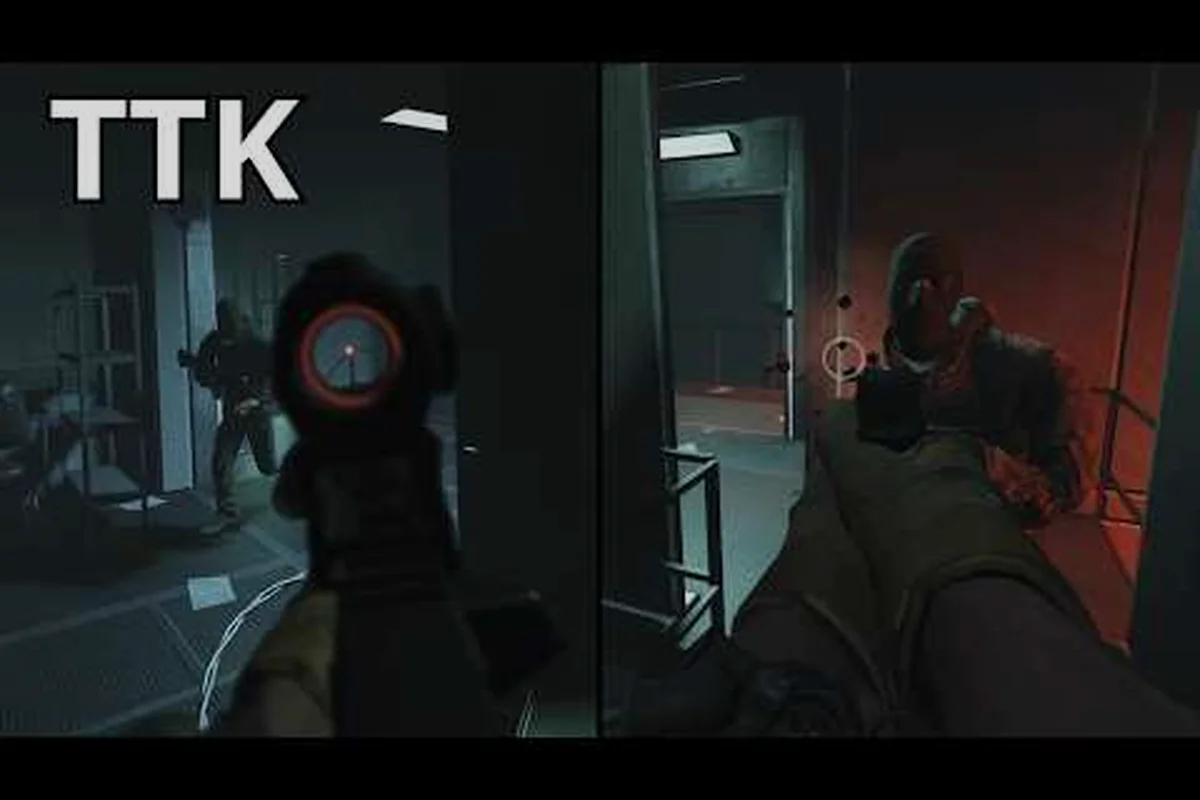
The TTK Testing ground war guide breakdown below is built around the realistic TTK values the developers have tuned into the V0.09 build. Because most gunfights in Ground War resolve in 3-5 hits depending on caliber, positioning and cover matter more than raw reaction time. Players who sprint through open lanes get deleted before they can finish a mag, which is why the best Ground War operators move in two- and three-man cells rather than solo rushing.
| Role | Primary Weapon | Secondary | Role Duty | Best Map Type |
|---|---|---|---|---|
| Pointman | Assault rifle | Sidearm | First contact, break sightlines | Tight urban |
| Anchor | LMG or DMR | Sidearm | Hold chokepoints, deny pushes | Long lanes |
| Flanker | SMG | Shotgun | Wrap wide, hit undefended angles | Open with cover |
| Objective | Carbine | Utility | Stay on the cap, call positions | Mixed terrain |
Pick a role before the lobby timer ends, not after the first contact. According to community testing reported by players on YouTube walkthroughs, squads that lock roles in pre-match win roughly 60% of Ground War rounds on the current map rotation, while squads that freestyle tend to bunch up on the objective and lose the ticket bleed in the last two minutes.
Ground War Rotations and Anchor Spots
Every Ground War map in the current rotation has at least two dominant anchor positions per side. Anchors hold the high ground or the chokepoint, pointmen push forward to make first contact, and flankers wrap around the map edge to catch enemies rotating between objectives. The mistake most new quick play players make is treating Ground War like a free-for-all with bigger teams; the mode punishes lone wolves because the ticket system bleeds your team every time you die without trading a kill.
When you take a fight, always check your mini-map for a friendly within 30 meters. If no one is close, you are likely out of position, and the smart play is to fall back to the nearest anchor rather than commit to the duel. The TTK Testing map chokepoints breakdown calls out the specific lanes where this discipline matters most, but the rule generalizes: if you cannot see a friendly icon, you are probably about to be traded by two enemies instead of one.
Free-for-All Survival in Quick Play
Free-for-all is the simplest quick play playlist on paper: drop into a lobby of 8-12 players, rack up the most kills before the 8-minute timer ends, and win. In practice, FFA is the purest aim-training mode in TTK Testing, and it is where most players build the muscle memory that carries over into Ground War and Hardpoint. There are no objectives to anchor on, no squad to coordinate with, and no ticket bleed, which means the only variable is how many gunfights you can win in a row before someone catches you reloading.
The TTK Testing ffa guide approach below treats the mode as a series of mini-duels rather than one continuous fight. Because the lobby is small, you will run into the same handful of players repeatedly, which means you can learn their movement patterns within two or three engagements. Players who adapt to enemy tendencies mid-match consistently top the scoreboard, while players who just sprint-and-spray end up feeding kills to the lobby's best aimer.
| Engagement Range | Recommended Weapon | Why | Counter to Watch |
|---|---|---|---|
| 0-15 meters | SMG or shotgun | Hipfire spread, fast follow-up | Players holding angles with AR |
| 15-40 meters | Assault rifle or carbine | Balanced damage and accuracy | Long-range DMR campers |
| 40+ meters | DMR or LMG | Consistent damage at range | Snipers on elevated positions |
The table above is not a strict loadout guide; it is a situational reference. The weapon you should equip depends on the map's dominant engagement range, which you can read from the first 30 seconds of combat. If most of the kills you see in the kill feed happen at close range, switch to an SMG. If the feed is full of long-range trades, pull out a DMR and start holding angles. FFA rewards adaptability more than any other quick play mode, because the enemy composition changes every round.
Spawn Flow and Anti-Camping Tactics
The biggest FFA-specific mistake is camping a single angle for the entire round. The spawn system in TTK Testing is designed to push players toward unoccupied territory, which means a camper eventually gets flanked by the entire lobby. Instead, the best FFA players move in a slow circuit: clear one section of the map, push toward the next power position, and let the spawns rotate enemies into your crosshair.
If you find yourself dying repeatedly to the same player, switch up your timing rather than your angle. A camper who kills you on the 30-second mark every life is reading your rhythm; offset your next push by 10-15 seconds and you will often catch them pre-aimed at empty space. According to community data from FFA-focused creators, this kind of timing adjustment is responsible for more comeback rounds than any single loadout swap.
Hardpoint Rotations and Time Management
Hardpoint is the most objective-focused of the three quick play playlists, and it is also the one with the steepest learning curve. The mode rotates a single hardpoint site across the map every 60-90 seconds, and the team that holds the site for the most cumulative time wins. There is no respawn ticket bleed, which means death is purely a time cost: every second you spend waiting to respawn is a second your team is not on the point.
The TTK Testing hardpoint guide framework below breaks the mode into three phases: pre-rotation, on-point, and post-rotation. Pre-rotation is the 10-15 seconds before the point moves, when you should already be moving toward the next site. On-point is the active hold phase, when you and at least one teammate should be on the hardpoint contesting or securing it. Post-rotation is the 5-10 seconds after the point moves, when the old site is no longer relevant and you need to be contesting the new one.
| Phase | Duration | Position Priority | Common Mistake |
|---|---|---|---|
| Pre-rotation | 10-15 sec | Move toward next site | Greeding old point for one more second |
| On-point | 60-90 sec | Contest or hold the hardpoint | Stack 4 players on the point, lose flanks |
| Post-rotation | 5-10 sec | Set up for next hold | Lingering on old site to chase kills |
The mistake the table flags in the on-point row is the most common Hardpoint error. Stacking all your players on the hardpoint feels safe, but it gives the enemy team free control of every flanking lane, which means you can hold the point for 30 seconds and then lose it in 10 because someone pushed through your unguarded side. The correct on-point composition is two players contesting, one player holding the nearest chokepoint, and one player rotating early for the next site. This four-role split is a community-tested standard that shows up repeatedly in Hardpoint strategy guides on YouTube.
Reading the Hardpoint Timer
Every Hardpoint site has a visible countdown, and the timer tells you everything you need to know about the next 30 seconds. When the timer hits 15 seconds, the next-site indicator appears on your HUD, and that is your cue to start rotating. When the timer hits 5 seconds, the old site is no longer worth contesting unless you are already on it. When the timer hits zero, the new site activates and anyone not within its radius is not contributing to the hold.
Players who internalize this rhythm carry Hardpoint rounds. Players who ignore the timer and chase kills end up with 30-second kill streaks that do not matter because their team lost the point by 20 cumulative seconds. The mode rewards discipline over flash, which is why it is often the playlist that experienced players queue for when they want a quick play match that still feels tactical.
Map Voting and How to Swing the Vote
Map voting is the layer that sits on top of quick play matchmaking. After you are placed into a server and the pre-match lobby finishes filling, the game presents three map options and lets every player in the lobby cast a vote. The map with the most votes is the one the round plays on, and ties are broken by random selection. You cannot abstain, and you cannot see how other players voted before you cast your own ballot, which makes the voting screen a genuine preference signal rather than a bandwagon mechanic.
The TTK Testing map voting system is straightforward, but the meta around it is more interesting than the screen itself suggests. Because the current map rotation includes both close-quarters urban layouts and long-range open layouts, the lobby's vote often reflects the average player's preferred engagement range. If you want a specific map, your best bet is to queue during off-peak hours when the lobby is smaller and your single vote carries more weight.
| Map Archetype | Engagement Range | Best Playlist | Voting Strategy |
|---|---|---|---|
| Urban CQB | 0-20 meters | Hardpoint or FFA | Vote early, momentum matters less than preference |
| Mixed Terrain | 15-40 meters | Ground War or Hardpoint | Safe default if you have no strong preference |
| Open Long-Range | 40+ meters | Ground War or FFA | Vote only if you brought a DMR or LMG |
The voting strategy column in the table above is based on community testing rather than a hidden mechanic. The game does not weight votes by skill or time-in-lobby, so every player gets exactly one equal vote. What that means in practice is that lobbies of 6-8 players (typical for Hardpoint) swing on 2-3 votes, while lobbies of 16-24 players (typical for Ground War) usually settle on the consensus map within a few seconds because the majority preference dominates.
When to Skip Voting and Re-Queue
If the map you hate wins the vote, you can leave the lobby and re-queue. There is no penalty for leaving before the round starts, and the matchmaking system will not deprioritize you for an early leave. The only cost is the 30-60 seconds you spent in pre-match, which is a fair trade if the alternative is 8-10 minutes on a map you do not enjoy.
According to community data, players who re-queue after a bad map vote report higher session satisfaction and fewer rage-quit incidents mid-round. The game is built around quick play, and the developers have signaled in the DevForum thread that the voting system is meant to keep players in matches they actually want to play. Use it.
Frequently Asked Questions
What is the fastest way to find a Ground War match in TTK Testing quick play?
Queue during peak hours (typically evenings in your region) with a full or near-full party. The system favors 16-24 player lobbies, and party members count toward the population threshold, so a squad of four will fill a Ground War server faster than four solo players tapping the playlist independently. If the queue stalls, switch to free-for-all for one round and try Ground War again, because the matchmaking layer often rebalances after a playlist swap.
Can I vote for a specific map in TTK Testing quick play?
Yes. After matchmaking places you in a server and the pre-match lobby fills, the game shows three map options and lets you cast one vote. The map with the most votes plays the round, ties are broken randomly, and you cannot see other players' votes before casting your own. If the map you wanted loses, you can leave before the round starts and re-queue without penalty.
Is free-for-all good practice for Ground War?
Yes, but with a caveat. FFA builds raw aim and movement discipline, which carries into Ground War, but the mode does not teach squad coordination, anchor positions, or objective timing. Use FFA to warm up your aim and learn weapon recoil patterns, then queue Ground War with at least one teammate to translate that aim into coordinated holds. Solo-queuing Ground War is possible, but the win rate gap between solo and squad play is significant.
How long does a Hardpoint round last in TTK Testing quick play?
A Hardpoint round runs about 6 minutes per site, with multiple sites rotating across the map. A full Hardpoint match typically lasts 15-20 minutes depending on the number of sites on the chosen map. The rotation timer is visible on the HUD, and the next site indicator appears roughly 10-15 seconds before the point moves, which is your cue to start rotating toward the new hardpoint.
Does map voting affect matchmaking in TTK Testing?
No, map voting happens after matchmaking has already placed you in a server. Your vote only decides which of the three offered maps the round plays on; it does not influence which mode you are queued into or which lobby you are placed in. If you want to influence your mode, pick the playlist tile directly; if you want to influence the map, vote after placement. The two systems are separate by design.