A solid TTK Testing squad guide starts with understanding that this Roblox tactical FPS punishes reckless sprinting and rewards players who treat every round like a small chess match. Built around realistic time-to-kill values, the game forces squads to coordinate sightlines, lean mechanics, and rotations rather than rely on twitch reflexes alone. If you have been losing trades in Hardpoint or dropping the Hardpoint hill before the first tick, the problem is rarely raw aim — it is a gap in squad fundamentals that the right practice loop can close within a few sessions.
Squad Roles and Pre-Round Setup
Before any round starts, the squad that wins TTK Testing's tactical modes is usually the one that already assigned roles during the warm-up lobby. Random matchmaking will throw you into a team of four or five, but you still get roughly twenty seconds between rounds to type out a quick plan. A standard pre-round setup looks like this in most competitive lobbies:
| Role | Primary Job | Weapon Slot | Key Equipment |
|---|---|---|---|
| Entry Fragger | First contact, breaks sightlines | Rifle or carbine | Flashbang equivalent |
| Support | Trades kills, watches flanks | SMG or DMR | Stun grenade |
| Anchor | Holds back site or objective | LMG or defensive rifle | Deployable cover |
| Flex / Roamer | Reads enemy patterns, rotates | Versatile AR | Smoke or decoy |
Coordinating these roles is the first layer of any competitive TTK Testing squad guide because the game currently runs on modes like Hardpoint, Ground War, and Quick Play PVP. The official TTK Testing on Roblox page confirms that the current rotation leans heavily on objective-based PVP, which means the anchor role matters just as much as the entry. Players who run in as a solo flock of four entry fraggers will burn out by the second objective because nobody is watching the rear angle.
A second pre-round step is voice or text comms calibration. If your squad uses Discord, set push-to-talk and avoid background noise. If you are in Roblox text chat, agree on short callouts like "one A," "two B," or "rotating through mid" so the team can react within a second. The competitive scene for TTK Testing is still small, and based on community testing, the squads that win ranked-style lobbies are the ones that developed a shared callout vocabulary over dozens of matches rather than improvising every round.
FPS Fundamentals That Win Fights
Even with perfect role assignment, your squad will lose every gunfight if the players have not internalized the core FPS fundamentals baked into TTK Testing's engine. The game simulates realistic TTK values, which means most rifles require two to three well-placed shots to drop an opponent at mid range. Because of that forgiving damage model, positioning and crosshair placement matter more than raw click speed.
Crosshair Placement and Pre-Aiming
Good crosshair placement means keeping the barrel of your weapon at head height and angled toward the next corner you expect an enemy to appear from. In TTK Testing, this habit pays off in two ways. First, you reduce the flick distance when an opponent swings out, which matters because lean mechanics let enemies peek at sharp angles. Second, you avoid exposing your head silhouette above obvious cover lines that experienced players will pre-fire. A simple drill: spend ten minutes in a free-for-all lobby only focusing on where your crosshair rests between engagements, then carry that habit into PVP matches.
Recoil Control and Burst Firing
The weapons in TTK Testing follow believable recoil patterns, and most rifles climb and pull slightly to the right on full-auto fire. Community testing shows that tapping or bursting in three-to-five-round groups keeps the crosshair inside the target's upper chest and saves ammo, which is critical in longer Ground War engagements. New players often hold the trigger and spray, which both widens the cone and burns through the magazine before the kill is confirmed. The fix is to fire in short bursts at ranges past fifteen meters, then transition to controlled auto only when the target is already tagged.
Movement and Lean Discipline
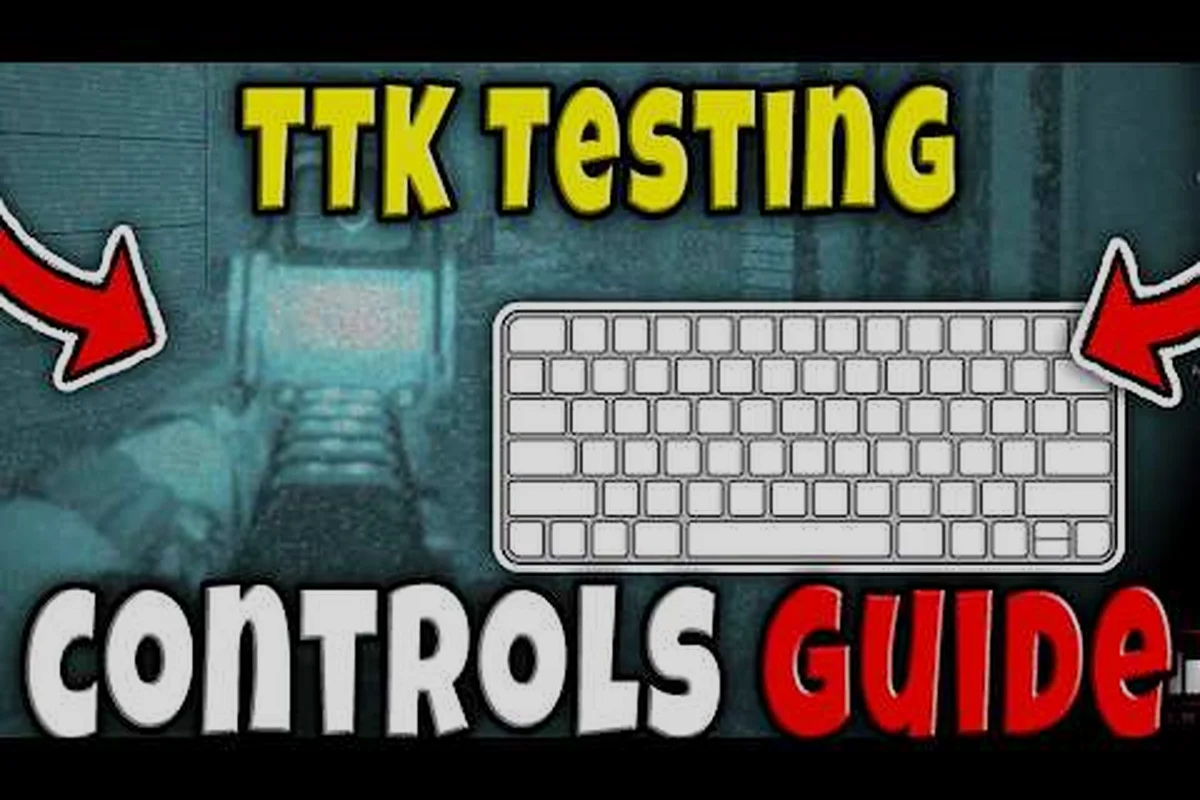
Movement in this Roblox tactical shooter is intentionally weighty. Sprinting everywhere makes you a sound cue and a hitbox the size of a barn door, which is why competitive players move from cover to cover with a mix of crouch, Q and E lean, and brief sprints. According to the TTK Testing controls explainer, C drops you into crouch, Q and E let you lean around corners, and P toggles the Helmet Cam overlay for recording footage. The lean keys are the single biggest advantage in this FPS guide for TTK Testing because they let you peek without fully exposing your body.
| Technique | When to Use | Common Mistake |
|---|---|---|
| Shoulder peek | Checking a corner for info | Holding the lean too long |
| Wide swing | Forcing a close-range trade | Swinging without teammate support |
| Crouch peek | Baiting an over-peeked enemy | Crouching in the open on long sightlines |
| Sprint cancel | Closing distance safely | Canceling into a slide on Hardpoint hill |
Game Sense, Map Knowledge, and Rotation Timing
Squads that treat every round the same lose to squads that adapt. TTK Testing's map rotation includes low-light night maps and daytime objective layouts, and the way you read the minimap determines whether you are always a step behind or always a step ahead. A good rule of thumb is to check the minimap every four to five seconds, even when you are holding an angle, because objective-based modes reward early rotation over late hero plays.
Reading Spawn Flow
Spawn flow in TTK Testing follows a roughly symmetric pattern: the game tries to place your squad opposite the enemy team after each round, then gently shifts spawns based on where the enemy is clustered. A squad that controls the strong side of the map can force the other team into a pinched spawn, which is why anchoring one player near the likely enemy spawn is a common competitive tactic. If you notice the enemy team repeatedly spawning behind your Hardpoint hill, that is a signal to push the back angle and reset the spawn flow before committing to the hill again. Once you've locked in the reset, practicing that spawn-flip pressure against a consistent timer helps build the muscle memory, and the same disciplined repetition approach covered in our Ttk Testing Beginner Guide translates directly to timing your Hardpoint rotations.
Objective Priority vs. Kill Priority
New players often chase kills because the kill feed feels rewarding, but the TTK Testing tutorial experience is built around objectives. In Hardpoint, the squad that wins is the squad that holds the hill with two players and watches the two entry lanes, not the squad that runs out hunting frags. In Ground War, the squad that pushes the capture point with smoke support and an anchor watching the rear will outscore a squad busy chasing headshots. A quick priority table helps squads stay aligned:
| Mode | Primary Goal | Secondary Goal | Common New Player Mistake |
|---|---|---|---|
| Hardpoint | Hold the objective | Trade kills for time | Leaving the hill to chase kills |
| Ground War | Capture and defend zones | Squad survival | Splitting the team across zones |
| Quick Play | Win the round | Practice new roles | Ignoring role assignment |
| FFA (warm-up) | Train aim | Test weapons | Treating it as a ranked match |
A good squad guide for TTK Testing always reminds players that objective time is the scoreboard stat that matters, and kill feed scrolling is a vanity metric unless it directly serves the objective. The official developer thread on the Roblox DevForum lists Ground War and Quick Play as the two live PVP formats, with co-op PVE Survival and doorkicker Missions in the roadmap. Until ranked and team-based modes expand, mastering the rotation between Hardpoint and Ground War is the fastest path to squad improvement.
Communication, Callouts, and the Helmet Cam
A surprising amount of competitive edge in TTK Testing comes from how the squad handles information. Callouts should be short, positional, and tied to map landmarks, not vague. Saying "one enemy A" is okay. Saying "one enemy pushing the blue container near A site, I'm low" is better because your support player can swing with trade potential. A solid squad agrees on landmark names before the first round and never changes them mid-match, because re-learning callouts on the fly kills the mental stack that FPS play demands.
The Helmet Cam is an underrated tool for both learning and squad review. Bind it to P, set Transparent Optics in Settings so your eyes stay open while aiming, and record short clips of your worst deaths. After a scrim block, the squad can swap clips and review crosshair placement, peek timing, and rotation decisions. This is exactly the loop that higher-tier competitive players use, and it works in TTK Testing because the game runs on Roblox's lightweight replay and screen-capture tools. The competitive scene is still small, so self-review is a free advantage nobody is gating behind a paywall.
Communication breaks down fast when one player tilts. A common mistake is blaming the entry fragger for dying first, when the real issue is the support player being twenty meters behind instead of within trade range. A simple rule: the support player should never be more than one room or one corner away from the entry. If your support is hanging back, the entry will always lose the trade, and the squad will bleed rounds. New players should treat this rule as non-negotiable until they climb out of the lower lobbies, then relax it as their mechanical skill catches up to their game sense.
Competitive Drills and the Weekly Practice Loop
Improving as a squad is more reliable when you follow a structured practice loop rather than grinding random matches. The following weekly plan is tuned for a four or five-player team that wants to climb in the 2026 PVP meta:
| Day | Focus | Activity | Duration |
|---|---|---|---|
| Monday | Aim fundamentals | FFA warm-up, target tracking, recoil control | 30 minutes |
| Tuesday | Role discipline | Scrim with assigned roles, swap roles each half | 45 minutes |
| Wednesday | Map study | Walkthrough replay of one map, mark callouts and cover | 30 minutes |
| Thursday | Hardpoint reps | Four full Hardpoint sets with fixed roles | 60 minutes |
| Friday | Review and rest | Watch Helmet Cam clips, take notes, light play | 20 minutes |
| Saturday | Scrim block | Three full Ground War sets against another squad | 90 minutes |
| Sunday | Flex day | Free play, test new weapon loadouts, casual queue | Open |
The structure is intentionally light on Mondays so the squad sharpens mechanics without fatigue, and heavy on Thursdays and Saturdays because those are the objective-heavy sessions that translate directly to ranked-style lobbies. If your squad is just starting out, even a two-day version of this loop (one aim day, one objective day) will produce noticeable improvement in two to three weeks, based on community testing reports from early-access players.
Common New Player Mistakes to Avoid
Even experienced FPS players fall into a few habits when they first queue into TTK Testing, and squashing those habits early is cheaper than fixing them later. The most frequent errors reported by the community include:
-
Sprinting into open sightlines because the sprint speed feels high, only to discover the realistic TTK means you trade instantly.
-
Ignoring the lean keys and shoulder-peeking with the entire body, which inflates the hitbox dramatically.
-
Not trading kills because support players hang back instead of swinging within one second of the entry death.
-
Chasing kill feed glory in Hardpoint and losing the objective by five points.
-
Skipping the Helmet Cam and never reviewing deaths, so the same misplay repeats every session.
-
Treating FFA warm-ups like ranked and burning mental energy before the actual scrim starts.
A focused TTK Testing new player mistakes checklist is honestly the single fastest way to climb because the game punishes these patterns consistently. According to a community improvement guide on YouTube, the difference between a silver-tier squad and a gold-tier squad is almost always better positioning and trade discipline, not better aim. The aim is a prerequisite, but positioning is the multiplier.
Weapon Loadouts and the 2026 Meta
Loadouts in TTK Testing are intentionally simple compared to mainstream tactical shooters, but the small choices still matter. Most weapons fall into three families: rifles for mid-range anchors, SMGs for close-range entry, and DMRs for long-angle support. Because the game balances around realistic TTK values, full-auto rifles dominate mid-range, while DMRs shine on the long sightlines found in Ground War's open maps. SMGs are situational but deadly in tight Hardpoint rotations where the entry needs to clear a corner fast.
| Weapon Family | Strength | Weakness | Best Role Match |
|---|---|---|---|
| Assault Rifle | Versatile, manageable recoil | Slightly outclassed at extreme range | Entry, Flex |
| SMG | High close-range TTK | Falls off past 20 meters | Entry, Anchor (indoor) |
| DMR | One-shot potential on tagged targets | Slow follow-up shots | Support, Anchor |
| LMG | High mag capacity, holds angles | Heavy movement penalty | Anchor, Hill holder |
A common squad mistake is duplicating the same weapon family across all four or five players, which leaves the team with no mid-range anchor and no close-range entry. Aim for at least one DMR or LMG, two assault rifles, and one SMG in a balanced squad, and rotate weapons weekly so everyone learns the recoil patterns of every family. The official roadmap includes gunplay improvements, so weapon balance may shift with future patches, but the underlying principle — diversify your squad's range coverage — will stay relevant throughout the 2026 competitive season.
Settings That Actually Matter
Two settings are worth tuning for competitive play, and the rest can be left on default. First, enable Transparent Optics in the Settings menu so you keep both eyes open while aiming down sights, which improves peripheral vision and reduces the tunnel effect when holding tight angles. Second, rebind lean keys to comfortable positions if the default Q and E feel awkward on your keyboard layout, because lean discipline only works if the input is muscle memory. The Roblox controls explainer video on YouTube confirms the default binds and offers a quick visual reference for the rest of the keybinds, which is a good resource to share with newer squad members who have not yet memorized the layout.
Frequently Asked Questions
What is the fastest way to improve as a squad in TTK Testing?
Run a structured weekly practice loop with one aim day, one objective day, and one scrim day, and review Helmet Cam footage after every session. Most squads that follow this rhythm for three weeks report noticeably better trade timing and fewer lost Hardpoint ticks, because the loop forces both mechanical and decision-making reps.
Which mode should new squads play first in the 2026 rotation?
Start with Quick Play PVP because the round format is short and the matchmaking is forgiving, then graduate to Hardpoint once the squad has settled on roles. Ground War is the most team-dependent mode, so it should wait until everyone is comfortable with at least one role and the shared callout vocabulary is locked in.
How do I avoid the most common new player mistakes?
Stop sprinting into open sightlines, use Q and E to lean before peeking, and keep your support player within trade range. These three fixes alone account for the majority of lost rounds in lower lobbies, and they cost nothing to practice since they only require discipline and not raw aim skill.
Is the Helmet Cam worth using in competitive play?
Yes, because it lets you record short death clips and review crosshair placement, peek timing, and rotation choices. Squads that review even one clip per player per week climb faster than squads that grind matches without any feedback loop, and the P keybind makes recording low effort once it becomes habit.
Where can I find the official TTK Testing roadmap and mode list?
The developer's official DevForum thread lists the current PVP modes and the upcoming co-op PVE Survival and doorkicker Missions roadmap, and the Roblox game page confirms keybinds and the Transparent Optics recommendation. Both are reliable for verifying which modes are live in the current build before you queue with your squad.